


The construction sector has been grappling with persistent safety risks for some time now. This year, too, people have lost their lives whilst working on construction sites, including during demolition work in Utrecht and during the construction of a logistics complex in Lelystad.
Incidents like these show why safety is not just a matter of rules, instructions and supervision. These are necessary, of course, but they do not provide the whole answer. What do people actually do in practice when schedules are tight, the pressure mounts or no one is watching?
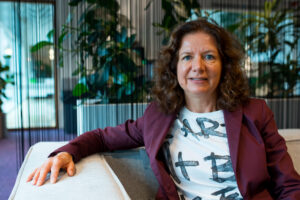
Kaat van der Haar, project leader for the Safety Culture Ladder at NEN, sees a particular vulnerability, especially among smaller companies
pattern. “In smaller companies, there’s often a culture of ‘don’t complain, just get on with it’,” she says. “As a result, risks such as working at height without fall protection are more readily accepted.”
Why more paper isn’t enough
As the pressure on safety increases, organisations often resort to more procedures, more forms and more checks. That is understandable, but it does not solve everything. It is precisely companies with a practical working culture that are not keen on even more red tape. They want to know what actually helps in the work itself. According to Van der Haar, that is where the value of the Safety Culture Ladder lies. “With this tool, you don’t need to introduce complicated management systems. I’m simplifying it now, but what matters is that people engage in open and honest dialogue with one another.”
The SCL is neither a safety management system nor a tick-box checklist. The ladder focuses on safety awareness, attitude and behaviour. It looks not at what an organisation has set out in writing, but at what people do, say and are willing to discuss.
The boundaries of systems
The Safety Culture Ladder was developed by ProRail. Around 2012, the rail network operator realised that its quality and risk management systems were in good order, whilst the decline in the number of incidents had come to a standstill.
“The quality management systems and risk management were in excellent order,” says Van der Haar. “Other standards and systems focus heavily on the reality on paper. And yet the decline in the number of accidents had stalled. The systems had been fully developed, but incidents kept occurring.”
The lesson was clear: rules and procedures are necessary, but they are not enough. Safety is ultimately determined by the choices made in practice. Does a member of staff speak to a colleague about unsafe behaviour? Is someone given the freedom to halt work? Is safety maintained as the deadline approaches?
In 2016, ProRail transferred the management of the scheme to NEN. This ensured the scheme’s independent status. NEN manages the SCL, monitors the working methods and brings the various parties together. The audits are carried out by certification bodies.
Misconception 1: the SCL is a paper-based audit
A persistent misconception is that an SCL audit is mainly about documents. That is not true.
“This is perhaps the most persistent misconception we come across,” says Van der Haar. “Unlike traditional audits, where an auditor ticks off procedures using a prescribed checklist, an SCL auditor actually works without a pre-determined questionnaire.”
The audit centres on interviews and observations. Not just with senior management or middle management, but also – and in particular – with staff on the shop floor. The SCL does not assess a reality that exists only on paper. The framework looks at behaviour, attitude and culture.
How do people react to risks? How are mistakes and incidents discussed? Are reports taken seriously? Is safety a matter for the safety officer, or for everyone?
Misconception 2: socially acceptable answers are enough
A second misconception is that organisations can steer an audit towards socially desirable answers. According to Van der Haar, this underestimates the nature of the process.
“Our auditors have undergone intensive training in interview techniques,” she says. “They don’t go out there to conduct a cross-examination, but rather to create a safe atmosphere in which people feel comfortable being open.”
An SCL audit is always carried out by two auditors. They cross-check their observations with one another. This is important because behaviour and culture are less straightforward to assess than a procedure set out in a file.
Auditors keep asking questions, comparing what people say with what they see, and checking for indications across various parts of the organisation. If the management’s account does not match the employees’ experience, this becomes apparent.
Misconception 3: safety is separate from day-to-day operations
The SCL takes a broader view than just physical safety. Of course, it covers the risk of falls, personal protective equipment and safe workplaces. However, during an SCL audit, auditors also examine social safety, psychosocial workload, wellbeing, integrity and reporting behaviour.
“It is precisely when the workload is high or deadlines are looming that a culture really proves its worth,” says Van der Haar. That is when it becomes clear whether safety is truly an integral part of the way we work.
What happens when speed clashes with a careful approach to work? What does a manager do when an employee has doubts? Is safety taken into account in decisions regarding planning, budgeting and collaboration with subcontractors, or is it only discussed when something goes wrong?
Misconception 4: You can fail the SCL
The word “fail” is also inappropriate in the context of the SCL. The audit is not an exam. The assessment provides an indication of the current level of cultural development.
“The SCL audit isn’t an exam with fixed marks or scores,” says Van der Haar. “There’s no question of passing or failing. Every company that goes through the process is held up a mirror.”
That level is neither an end point nor a judgement of right or wrong. It is a starting point. That is precisely what makes the ladder useful: it gives organisations a clear picture of where they stand and where the discussion needs to go next.
From obligation to dialogue
Many organisations start with the SCL because their clients ask for it. That is understandable. But according to Van der Haar, the conversation often changes during the process.
“An internal survey carried out by NEN among participating organisations revealed that virtually all companies had initially adopted the scheme because they were obliged to,” she says. “But over time, they realised the benefits it brought them: better communication amongst staff, greater well-being in the workplace and a reduction in sick leave.”
For organisations with up to 50 employees, there is SCL Light for small organisations This product offers a simplified assessment up to level 3. The online Self-Assessment Questionnaire is part of the process, but the focus remains on the discussion about behaviour in the workplace. If, as an organisation, you can demonstrate in year two of the audit cycle that you have made good progress, the external audit is no longer required in year three.
A reflection of real-life practice
You can set out a procedure for safe behaviour. A culture of safety is something you have to experience together.
As Van der Haar puts it: “The ladder isn’t there to check what you promise, but to help you with what you actually do.”
NEN is the owner and independent scheme administrator of the Safety Culture Ladder. NEN provides general information about the SCL, its products and the certification process. Organisations can contact SCL Knowledge Partners. The assessment is carried out by certifying bodies.